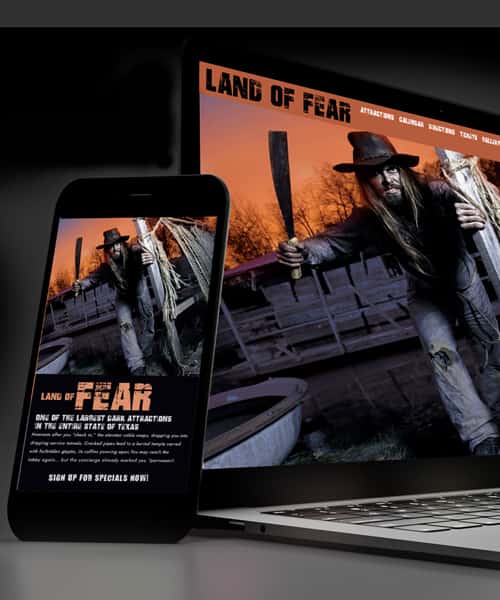
Most haunted house websites look loud... but sell poorly—an effective site is clean, fast, and built to convert, so you get more ticket buyers (and fewer drop-offs) than your current site ever will; see what your upgrade could look like.
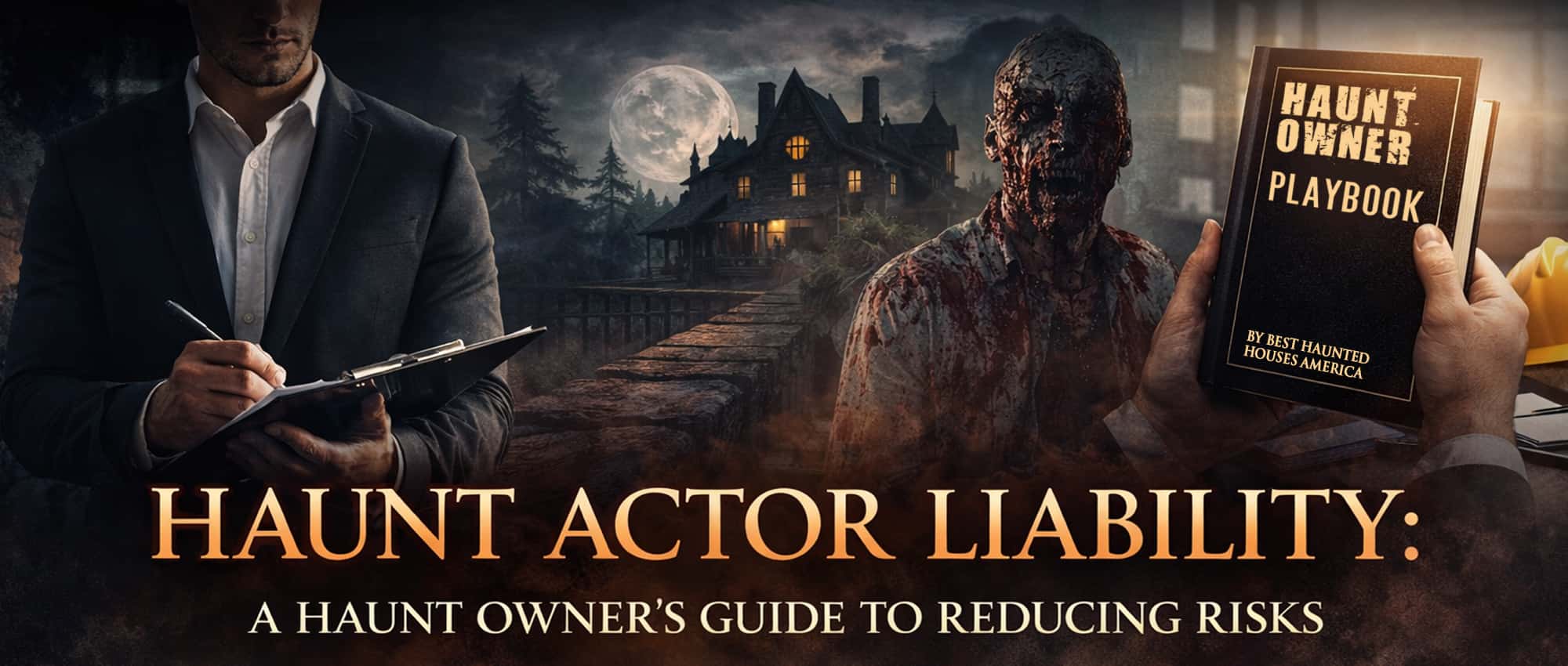
PLAYBOOK:
How to Limit Haunt Actor Liability
Haunt Actor Liability: The Owner’s Playbook
A BHAA practical, owner-focused guide for haunted house owners to protect guests, your team, and your business... with fewer headaches and legal battles.
You can build the best scenes in your state, run flawless marketing, and still have your season completely trashed by one thing. Actors. If you run a haunted house or scream park, you already know the truth: your biggest liability isn’t the fog, the darkness, or the chainsaw sound—it's your own people.
Actors can (and will if you're in the business long enough) create massive problems for haunt owners through:
unwanted sexual behavior (between actors, guests, or both), hitting, grabbing, bumping, or otherwise injuring guests, damaging props, sets, costumes, and equipment, showing up late or not at all—crippling key scenes, fights, threats, and “off-script” behavior that escalates fast
WHY THIS ARTICLE IS SO IMPORTANT TO YOU
Most haunt lawsuits and blow-ups don’t start with a monster—they start with a lack of rules, training, supervision, and documentation. The good news is you can reduce that risk dramatically with a simple system for seasonal operations.
REMEMBER: Just one bad actor can cost you far more than a night of ticket sales: It could cost you substantial refunds, medical claims, police involvement, PR fallout, staff turnover, and legal exposure that can follow you for years.
Below is a clean, high-impact framework that covers the main liabilities and what to do about them.
The Liability Framework:
Control the 5 Biggest Risk Areas
1) GUEST CONTACT, INJURIES, and "I GOT TOUCHED"
This is the #1 operational risk because it’s fast, emotional, and hard to “undo” after the fact.
Common Actor-Caused Incidents
Grabbing shoulders, blocking exits, pushing too close
Bumping guests in tight corridors
Running, chasing, or cornering guests
Hitting with props or costume parts
Tripping hazards created by actors (moving set pieces, cords, doors)
Controls That Actually Work
Make A Hard Rule And Enforce It:
No touching guests. Ever. (Unless you’re operating a clearly-defined, opt-in “contact night” with separate ticketing, separate training, and separate staffing.)
No chasing. No running. Walking pace only.
No jump-outs into the guest path. Actors hit “marks” only.
Train "Distance Discipline":
Teach actors the “bubble”: keep a minimum of 18–24 inches unless the scene is designed for closer.
Teach angled approaches instead of head-on approaches in narrow hallways.
Scene Engineering For Safety:
Add actor zones (tape marks, low lights, rails, or subtle barriers) to keep actors from drifting into the guest flow.
Identify “pinch points” and adjust blocking.
Incident Reporting Culture:
Attractions industry safety guidance emphasizes incident reporting as a core operator responsibility because documenting and responding consistently matters.
2) SEXUAL MISCONDUCT & HARASSMENT
This is where haunt operations get blindsided because the environment is dark, physical, late-night, and often involves teens/young adults, plus adrenaline.
The Risk You Need To Plan For
Actor-on-actor harassment (including coercion, unwanted touching, “jokes,” DMs)
Guest-on-actor harassment (groping, sexual comments, stalking)
Actor-on-guest misconduct (absolutely catastrophic liability)
The Minimum System You Should Have
A Written "Zero Tolerance" Code Of Conduct that clearly bans:
Sexual touching or sexual contact of any kind at work
Harassment (verbal, physical, digital)
Retaliation against anyone who reports
A Reporting Path That Isn't A Dead End
EEOC guidance recommends providing clear ways for employees to report harassment, ideally including at least one option outside their direct chain of command, and protecting against retaliation.
A Fast Response Process
Separate the parties immediately (schedule changes, scene reassignment)
Document what you were told, by whom, and when
Investigate promptly and take corrective action
A Guest Harassment Protocol
Give actors a simple “exit line” and a signal to call security
Empower supervisors to remove guests quickly
Make it visible on signage/rules: “Harassment of staff = removal.”
3) VIOLENCE, THREATS, AND "ACTORS GOING TOO FAR"
Haunts have an elevated risk profile: crowds, intoxicated guests, high emotion, and performance that can cross lines.
OSHA emphasizes that employers reduce the risk of violence through policies and prevention programs, including a zero-tolerance policy and a site-specific approach.
Controls That Work In A Haunt Setting
No weapons (real or realistic) unless approved props and locked-down use
No physical “retaliation” if a guest touches an actor—actors disengage and signal security
Security is visible and fast (roving, not parked at the gate)
Train Actors On Three Steps
Disengage
Create distance
Signal supervisor/security
4) PROPERTY DAMAGE. PROPS, SETS, AND "ACTOR RAGE"
Breakage happens, but you can reduce it with structure.
Preventable causes
Actors slamming doors
Mishandling props
Horseplay backstage
Anger/frustration “taking it out” on set pieces
Theft or “borrowing” tools and gear
Controls
Prop check-in/check-out for handhelds and high-value items
Backstage rules (no running, no horseplay, no guests)
Scene captain responsible for set condition nightly
Damage log: what broke, why, who was present, what changed
Pro tip: You’re not trying to “catch” people—you’re creating a culture where equipment is respected and patterns get corrected early.
5) ATTENDANCE, NO SHOW, AND "YOU JUST RUINED MY BEST SCENE"
This one feels less “legal,” but it becomes a real liability and business risk when:
You advertise a feature character/scene, and it can’t run
Emergency changes cause safety issues (untrained fill-ins, understaffed zones)
The show degrades and triggers refunds, disputes, or crowd management problems
Controls That Work
Role redundancy: every critical role has a trained backup
Call time + confirmation: “Reply YES by X:00” policy for critical nights
Attendance policy in writing: late/no-show consequences are clear
Standby pool: 3–10 actors paid a smaller standby rate for peak nights
The System That Actually Reduces Liability
Without Killing the Fun
If you implement only 4 things, implement these:
1) One-page Actor Code of Conduct (Signed)
Short. Clear. No loopholes.
2) Mandatory Training (30 Minutes, Documented)
You’re not training Oscar winners. You’re setting safety expectations and response habits.
3) Real Supervision
Scene captains + roaming supervisors + fast security response.
4) Documentation
Not for “gotcha.” For protection and pattern recognition:
Incident report form
Daily notes log
Corrective action log
Top 10 Actor Rules That Prevent 90% of Problems
Use these as posted rules + pre-shift reminders.
1. No touching guests. Ever. This is, of course, not the case with Haunts that let Actors touch. If that is you, you need a separate set of very specific guidelines regarding touching.
2. No chasing or running.
3. Stay on your marks.
4. Guests have the lane. No blocking exits or trapping guests.
5. No sexual comments, touching, DMs, or “jokes” at work.
6. If a guest touches you: disengage, distance, signal.
7. No freelancing with props or physical stunts.
8. No drugs/alcohol on shift.
9. No horseplay backstage.
10. If you see a problem, report it immediately. No retaliation.
Print it. Post it. Read it to All Actors Before the Gates Open.
How To Get A Free Spec Website For Your Haunted House
IMAGINE what your haunted house website could look like if it were created by a talented team of design professionals who think way outside the "normal" box.
IMAGINE your website looks totally unique to your attraction. Unlike other tired designs that resemble everyone else.
IMAGINE your website grabbing visitors by the throat! An effective website that delivers you a Huge Edge over all of your competition. A site that feels sharper, stronger, more modern, and more powerful.
IMAGINE your website grabbing visitors by the throat! An effective website that delivers you a Huge Edge over all of your competition. A site that feels sharper, stronger, more modern, and more powerful.
IMAGINE a website built for the future of the haunt and horror industries, not one that feels trapped in outdated design trends from 10 or 20 years ago.
IMAGINE partnering with a company that offers you more than just web design — a company with deeper marketing resources, stronger creative support, and added value... much of which is at no additional cost.
NOW IMAGINE SEEING A FREE SPEC OF YOUR NEW WEBSITE!
No obligation. No pressure. No gimmicks. Just a chance to see what your haunt website could be.
You deserve a website built around your attraction
You also deserve a branded website that stands out and is remembered.
THIS OFFER IS LIMITED TO 10 HAUNTED HOUSE OWNERS OR SUPPLIERS IN THE HAUNTED HOUSE INDUSTRY.
Your New Haunt Website Starts Here

Scream Loud. Whisper Gently.
Or Just Envision.
It Doesn't Matter.
But You Do!
If you are a haunted house owner, scream park operator, theme park director, horror filmmaker, actor, producer, novelist, or anyone helping shape the haunt and horror industry, we want to hear from you.
Best Haunted Houses America is a bold new home for the people, attractions, and voices that make this industry what it is. From attraction owners and operators to filmmakers, actors, novelists, vendors, designers, and creators of all kinds, BHAA is a place to connect, contribute, and help shape what comes next.
Ideas, Opinions, Suggestions, Contributions... connect with us here!
BEST HAUNTED HOUSE FEATURES